Tobacco affects the mouth before it affects anything else — it is the first tissue exposed. In dentistry the effects are visible daily, and some of them are serious.
Gum disease
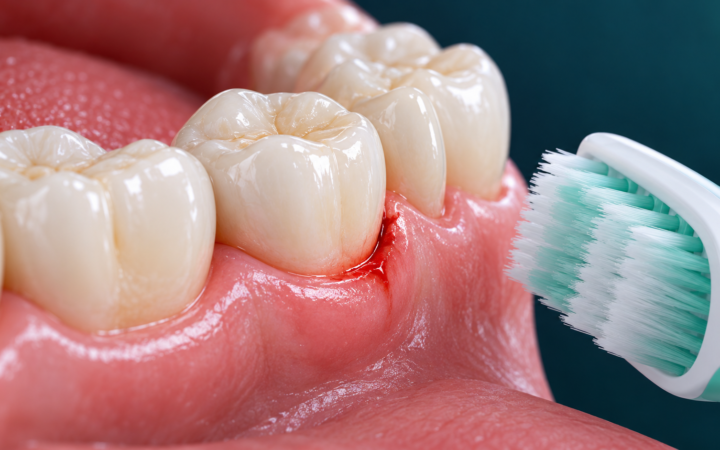
Tobacco use is the strongest risk factor for periodontal disease after plaque itself. Smokers lose teeth to gum disease at substantially higher rates than non-smokers.
There is a particularly dangerous aspect to this. Nicotine constricts blood vessels, so smokers’ gums often do not bleed. Bleeding is the main early warning sign of gum disease — and in smokers it is suppressed. The disease progresses silently and is frequently advanced by the time it is noticed.
Treatment also works less well. Healing after scaling and root planing is measurably poorer in smokers, and gum surgery has a higher failure rate.
Implant failure
Smoking significantly increases the risk of dental implant failure. Reduced blood supply impairs the bone integration the implant depends on. It is not an absolute barrier to treatment, but you should know the odds shift before investing in one.
Delayed healing after extractions
Smoking is the single biggest risk factor for dry socket after a tooth extraction — the blood clot is dislodged or fails to form properly, exposing bone. It is intensely painful and delays healing by days.
Staining
Tar and nicotine produce a stubborn brown-yellow stain that ordinary brushing does not shift. Professional cleaning removes it, but with continued use it returns within weeks. Whitening on a smoker’s teeth gives short-lived results.
Bad breath and lost taste
Tobacco leaves its own odour, causes dry mouth and gum disease, and dulls both taste and smell. Many people who quit report food tasting properly again within weeks.
Oral cancer
This is the serious one, and it needs stating plainly.
Tobacco in all forms — smoked, chewed, and in paan and gutkha — is the major risk factor for cancer of the mouth, tongue, cheek and throat. Combined with alcohol, the risk multiplies rather than adds. In India, chewed tobacco and areca nut are associated with a very high burden of oral cancer, and it frequently presents late.
Signs to act on immediately:
- An ulcer that has not healed in three weeks
- A red or white patch that will not rub off
- A lump or thickening in the cheek, tongue or neck
- Persistent numbness of the lip or tongue
- Difficulty or pain on swallowing, or persistent hoarseness
- Progressively reduced mouth opening — a warning sign of submucous fibrosis, associated with areca nut
We screen soft tissues at every routine examination. Early detection changes outcomes enormously.
Chewing tobacco is not safer
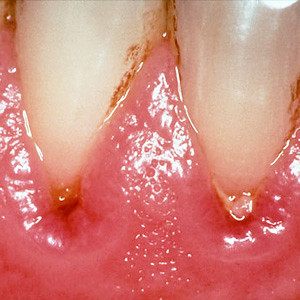
A common belief and a wrong one. Chewed tobacco and gutkha hold carcinogens directly against the cheek for extended periods, cause severe gum recession at the site, wear teeth down, and are strongly linked to submucous fibrosis — a progressive stiffening of the mouth that limits opening and is itself pre-cancerous.
What improves when you stop
- Circulation to the gums improves within weeks, so treatment starts working properly
- Healing after extractions and surgery normalises
- Implant success rates rise
- Taste and smell recover
- Staining stops recurring after cleaning
- Oral cancer risk falls progressively over the years following cessation
Gum tissue lost to disease does not come back, but progression can be stopped.
If you use tobacco
Tell us — it changes how often you need to be seen, and we will check your soft tissues carefully every visit. Nobody here is going to lecture you. Even reducing helps, and quitting helps enormously.
Book a check-up and screening on 8359017239. Related: gum disease explained.