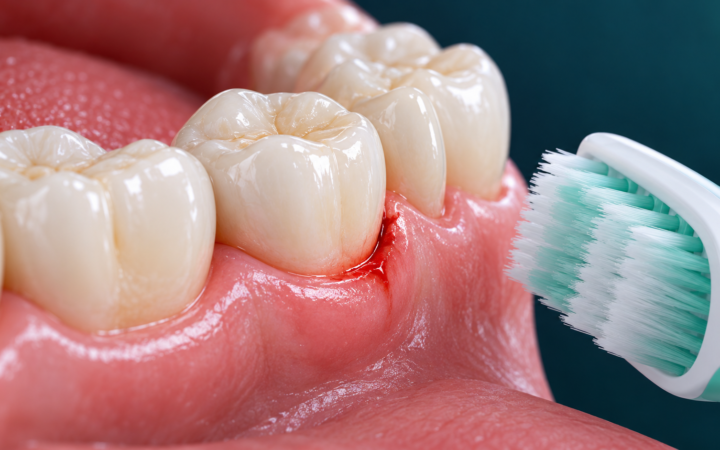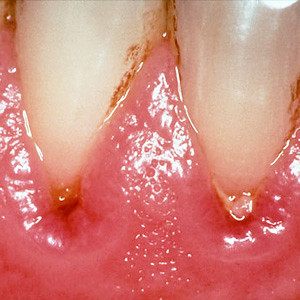
Gum disease is the leading cause of tooth loss in adults, and almost nobody notices it starting. It is painless until it is advanced, which is exactly what makes it dangerous. The good news is that its first stage is completely reversible.
The two stages
Gingivitis — reversible
Plaque builds up along the gum line. The gums respond with inflammation: red or purplish rather than firm pink, slightly swollen, and bleeding when brushed or flossed. Bad breath is common.
Nothing has been permanently lost at this stage. A professional scaling plus proper daily cleaning returns the gums to health within a couple of weeks.
Periodontitis — manageable, not reversible
Left alone, the inflammation works deeper. The gum detaches from the tooth, forming a pocket you cannot clean. The bone holding the tooth in its socket begins to dissolve.
Bone does not grow back on its own. Treatment stops the disease progressing and saves what remains. This is why the first stage matters so much.
Symptoms
- Gums bleeding when you brush, floss or bite an apple
- Red, swollen or tender gums instead of firm and pale pink
- Persistent bad breath that brushing does not fix
- Gums pulling back so teeth look longer, with sensitivity at the exposed root
- Teeth feeling loose, or your bite suddenly feeling different
- Pus at the gum margin when pressed
- Food packing into a gap that never used to trap food
Notice what is absent from that list: pain.
What raises your risk
- Tobacco in any form. After plaque itself, this is the strongest factor. Tobacco also constricts blood vessels, so smokers’ gums often do not bleed — masking the disease while it advances. See smoking and oral health
- Diabetes — the relationship runs both ways
- Crowded teeth that trap plaque out of a brush’s reach
- Pregnancy and hormonal change
- Dry mouth and certain medications
- Family history — susceptibility does run in families
Treatment
Scaling and polishing removes plaque and hardened tartar. This is the whole treatment for gingivitis and the starting point for everything else.
A myth worth killing: scaling does not loosen teeth or damage enamel. Tartar can splint teeth already loosened by bone loss — removing it reveals mobility that was already there.
Root planing and curettage for deeper pockets, cleaning the root surfaces below the gum line under local anaesthesia.
Laser gum therapy reduces bacterial load in pockets with less bleeding and discomfort, used alongside thorough mechanical cleaning rather than instead of it.
Maintenance every three to four months rather than six once you have had periodontitis, because the remaining pockets re-colonise faster.
Full detail on our gum treatment page.
What you do at home matters more
We can clean your teeth perfectly and plaque returns within 24 hours. Daily technique is what controls the disease.
- Two minutes, twice daily, soft brush at 45 degrees into the gum line — that junction is where the disease lives
- Clean between the teeth every single day
- Gentle pressure. Hard brushing wears grooves in roots and pushes gums back
- Stop tobacco. Nothing else you do comes close
If your gums bleed when you brush, book a check-up. At the gingivitis stage this is one appointment and a change of habit. Call 8359017239.