The urge to straighten teeth is remarkably old. Archaeologists have found mummified remains with metal bands wrapped around individual teeth, and catgut used where we now use wire. What has changed is not the ambition but the biology we understand behind it.
Ancient beginnings
Egyptian mummies have been found with crude metal bands around the teeth, connected by cord made from animal intestine. Whether these were placed during life or after death is debated, but the intent — holding teeth in position — is clear.
Greek and Roman writers described crowded teeth and proposed remedies. Aulus Cornelius Celsus, writing in the first century, recommended pressing on a misplaced tooth with the fingers, daily, to guide it into position. Given what we now know about gentle continuous force, that was closer to correct than it might sound.
The 18th century: the field gets a name
Pierre Fauchard, widely regarded as the founder of modern dentistry, published Le Chirurgien Dentiste in 1728. He described a horseshoe-shaped metal strip, the bandeau, tied to the teeth to expand the arch. It was crude, but it was the first systematic appliance.
Later in the century others experimented with wire ligatures and the use of extraction to relieve crowding — a debate that continues, in more refined form, today.
The 19th century: mechanics arrive
The 1800s brought rubber elastics, the first wire crib appliances, and the beginnings of a scientific approach. Practitioners started to classify malocclusion rather than simply improvising.
The pivotal figure was Edward Angle, working at the turn of the twentieth century. His classification of malocclusion into Class I, II and III is still taught and used in every orthodontic clinic in the world, including ours. Angle also argued that orthodontics should be a specialty in its own right — which is why an orthodontist today completes years of training beyond a dental degree.
The 20th century: the modern appliance
- Stainless steel replaced gold and ivory in the 1930s — cheaper, stronger and far more practical
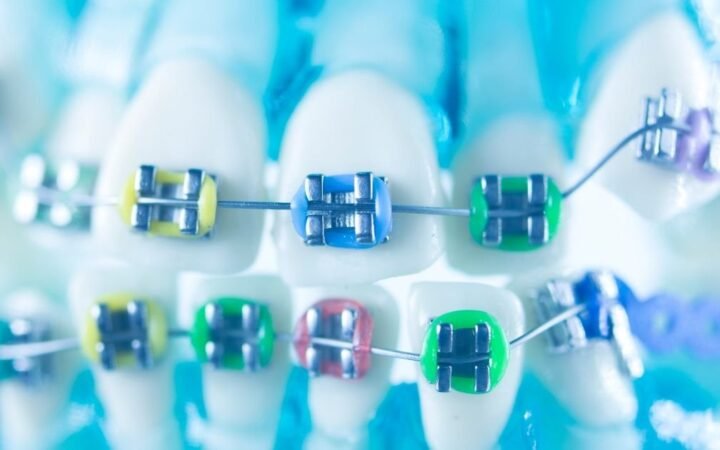
- Bonding adhesives in the 1970s meant brackets could be glued directly to enamel, rather than every tooth needing a metal band wrapped around it. This single change made braces smaller, more comfortable and much more common
- Nickel-titanium wire, developed from space programme research, brought wires that deliver light continuous force across a long range — a genuine leap in comfort and efficiency
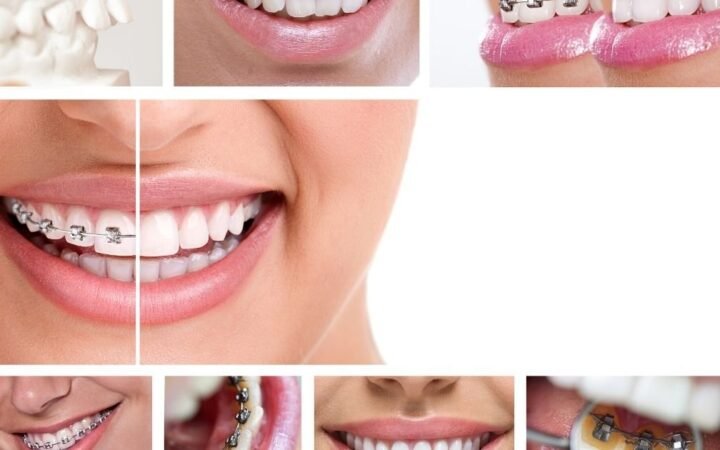
- Ceramic brackets and, later, lingual appliances addressed appearance
The 21st century
Digital scanning replaced impression trays for many patients. Three-dimensional planning software allows tooth movement to be simulated before treatment begins. And clear aligners moved from a niche product to a mainstream option for suitable cases.
The underlying biology, though, is exactly what it was: gentle continuous force, bone remodelling, and time.
What has actually improved for patients
- Brackets are a fraction of the size they were
- Wires apply gentler force, so treatment is far more comfortable
- Options exist for patients who cannot have visible appliances
- Digital planning makes outcomes more predictable
- Retention is properly understood — 19th-century practitioners had no idea why their results relapsed
Modern orthodontics at our Madan Mahal clinic with Dr. Abhinav Shrivastava MDS. See braces and clear aligners, or read about the types available today. Call 8359017239.