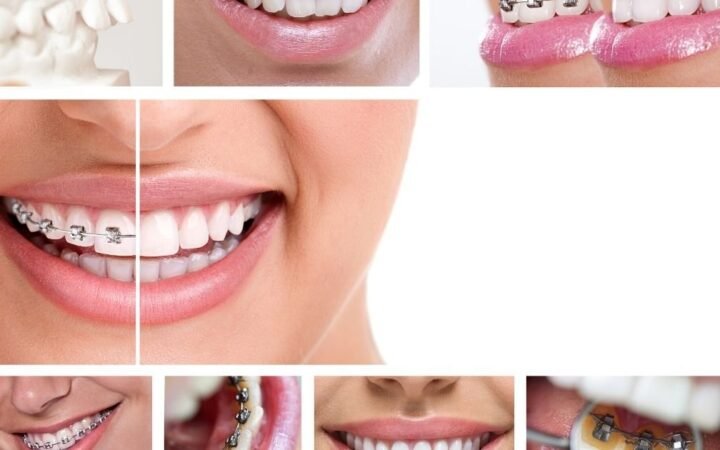
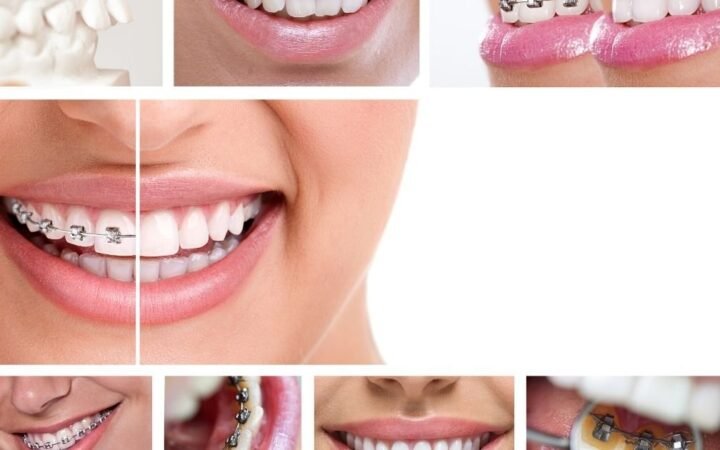
“Invisible braces” covers three quite different treatments — clear aligners, ceramic braces and lingual braces. They achieve discretion in different ways, and they are not interchangeable. Here is what each one actually is.
Clear aligners
A series of transparent removable trays, custom-made from a scan or impression of your teeth. Each tray is shaped very slightly differently from the last, and wearing it applies gentle pressure that moves the teeth toward that shape.
You wear each tray for one to two weeks, 20 to 22 hours a day, removing them only to eat and clean your teeth.
Advantages: nearly invisible, no food restrictions at all, far easier to brush and floss, fewer emergency visits since there is nothing to break, and you can remove them briefly for a photograph or presentation.
Limitations: they work only while worn — this is the single biggest determinant of success. They also handle some movements poorly: severe rotations, significant bite correction and closing large extraction spaces are all better served by fixed braces.
Ceramic braces
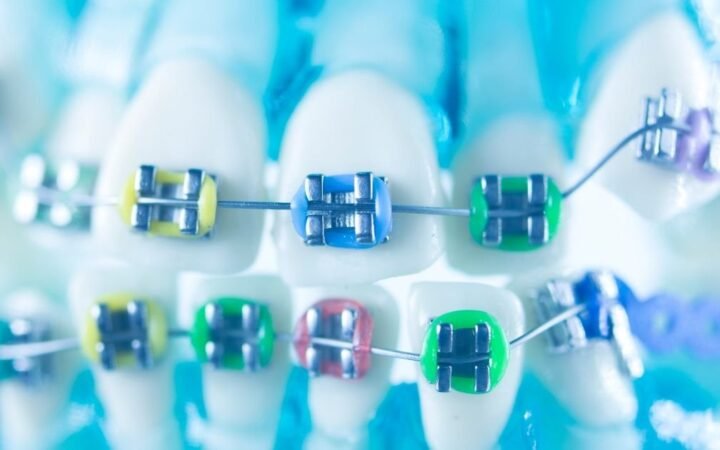
Conventional brackets and wire, but with tooth-coloured ceramic brackets. Fixed in place, so nothing depends on your compliance.
Advantages: full mechanical capability of metal braces, considerably less visible, nothing to remember to wear.
Limitations: visible up close, more expensive than metal, slightly bulkier, and the clear ties can stain between appointments — though they are replaced at each visit.
Lingual braces
Brackets bonded to the tongue side of the teeth. Genuinely invisible from any angle.
Advantages: completely hidden, full fixed-appliance capability.
Limitations: the most expensive option, technically demanding to fit and adjust, and there is an adjustment period of one to two weeks where the tongue is uncomfortable and speech is slightly affected.
Which is right for you?
This is genuinely a clinical decision, not a shopping decision. It depends on what needs to move.
- Mild crowding, spacing, or relapse after previous braces — aligners are excellent, and often the fastest route
- Moderate to complex crowding, bite correction, extractions — ceramic or metal braces
- Complex case but absolutely nothing can show — lingual
- Poor compliance likely — anything fixed, not aligners
We will tell you plainly if aligners are not suitable for your case. Fitting the wrong appliance to a case wastes a year and finishes with a compromise.
How long does invisible treatment take?
Aligner cases for mild crowding often finish in 6 to 12 months. Ceramic and lingual cases run the same 12 to 24 months as metal braces, because the biology of tooth movement is identical regardless of what is attached to the tooth.
Read more about how tooth movement actually works.
Care
- Aligners: rinse each time you remove them, brush them gently with cool water (hot water warps them), never eat or drink anything but water while wearing them — sugary drinks get trapped against the enamel
- Ceramic: clean thoroughly around every bracket; avoid hard and sticky food which can fracture ceramic
- Lingual: an interdental brush is essential, since the inside surfaces are harder to see and reach
Retainers apply either way
No matter which appliance moved your teeth, they will drift back without a retainer. This is not a sales point, it is biology.
Clear aligners and ceramic and lingual braces are all available at our Madan Mahal clinic. See our braces and aligners page, or call 8359017239.