Once you have decided to straighten your teeth, the next question is which appliance. There are five realistic options, and the right one depends on how much movement your case needs, your age, your budget, and how visible you are prepared for the treatment to be.
Metal braces
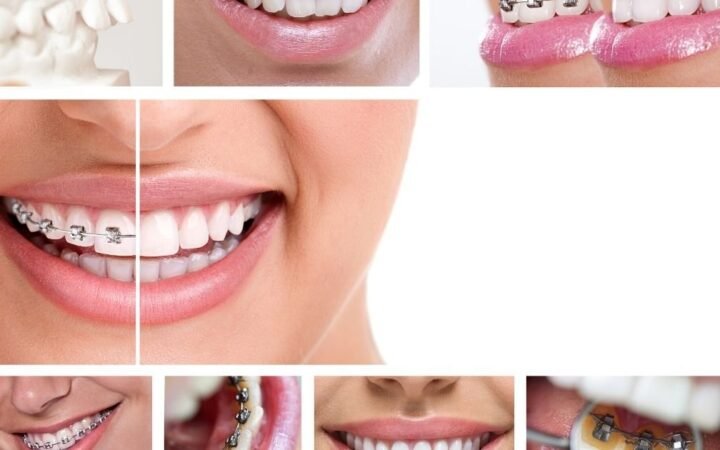
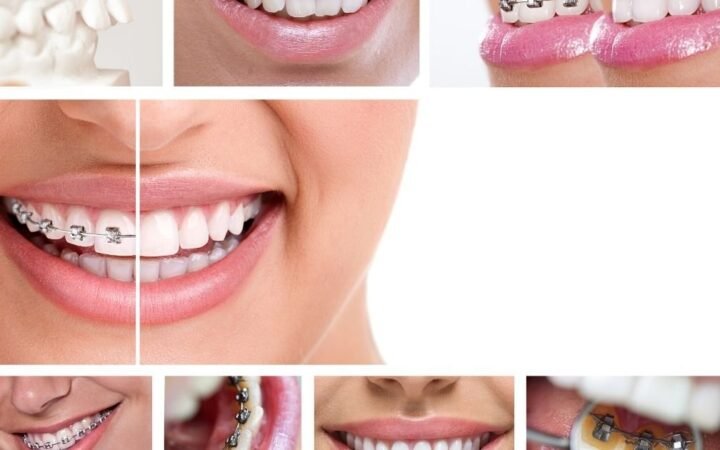
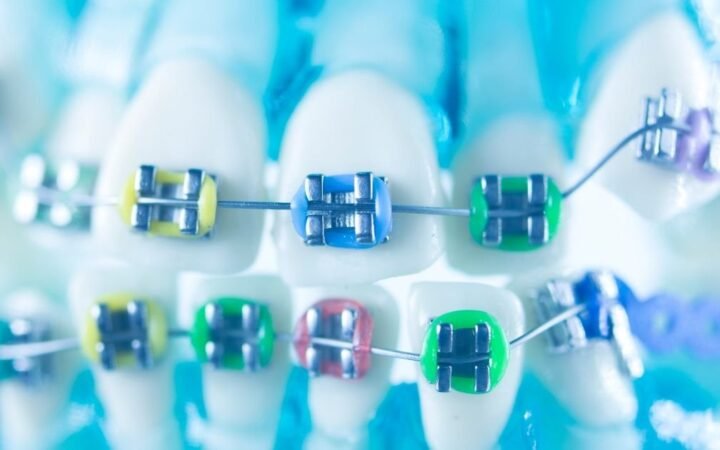
Stainless steel brackets bonded to the front of each tooth, joined by a wire. The workhorse of orthodontics: strongest, most precise for complex movements, most affordable.
Modern brackets are far smaller than the ones you remember. Coloured elastic ties let younger patients have some fun with them.
Best for: complex cases, growing children and teenagers, and anyone who wants the most treatment for the money.
Ceramic braces
The same mechanics with tooth-coloured ceramic brackets that blend into the teeth. From conversational distance they are much less noticeable.
They cost more, sit slightly bulkier, and the clear ties can pick up stain from strong curry, tea and coffee between visits — though ties are changed at every appointment.
Best for: adults and older teenagers who need real bracket-and-wire mechanics but want discretion.
Lingual braces
Brackets bonded to the inside surfaces of the teeth, facing the tongue. Completely invisible from outside.
They are the most technically demanding to fit and adjust, take a couple of weeks to get used to for the tongue and for speech, and are priced accordingly.
Best for: patients who cannot have anything visible at all, often for professional reasons.
Clear aligners
A sequence of removable transparent trays, each moving the teeth a fraction of a millimetre, worn 20 to 22 hours a day and changed every one to two weeks.
You remove them to eat and brush, so there are no food restrictions and cleaning is far easier. The catch is that they only work while they are in your mouth — patients who leave them out lose weeks of progress.
They handle mild to moderate crowding, spacing and relapse extremely well. Severe rotations, large bite corrections and some extraction cases still do better with fixed braces, and we will tell you honestly which category you fall into.
Best for: mild to moderate cases where appearance matters and the patient is disciplined.
Self-ligating braces
Brackets with a built-in clip holding the wire instead of elastic ties. Appointments can be slightly shorter and there are no elastic ties to stain.
Best for: patients wanting fewer, quicker adjustment visits. The claim that they dramatically shorten total treatment time is not well supported by the evidence.
Choosing
- Budget is the main constraint → metal
- Want discretion but need real mechanics → ceramic
- Nothing visible at all → lingual
- Mild case, disciplined → aligners
- Child or teenager → almost always metal
The part that decides the outcome
Whichever appliance you choose, the result depends on two things you control: cleaning around the brackets, and wearing your retainer afterwards. Skip either and the appliance choice becomes irrelevant.
Read more on caring for braces and how braces actually move teeth.
Orthodontic assessment in Jabalpur with Dr. Abhinav Shrivastava MDS — see our braces and aligners page or call 8359017239.